
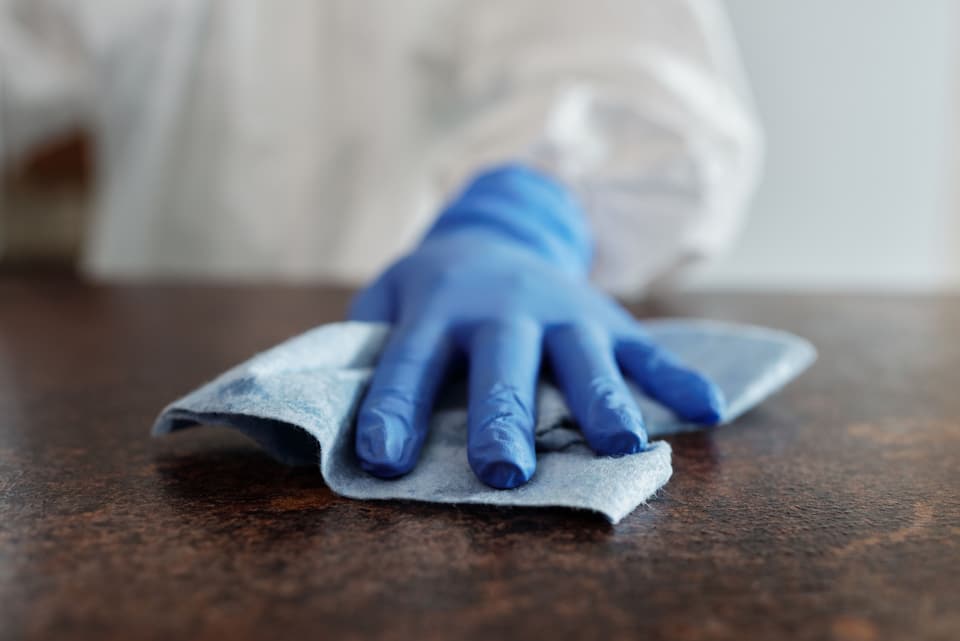
These two words get used interchangeably and they are not the same thing. The difference matters for food safety, for health inspections, and for whether the product you bought is doing what you think it’s doing.
The difference
A sanitizer reduces bacteria on a surface to a level considered safe by public health standards. It works fast — often in under a minute — and it’s what you want on food-contact surfaces.
A disinfectant kills a broader range of organisms, including viruses and fungi, and the specific claims depend on the product. It generally needs a longer contact time and is what washrooms, clinics and care homes need.
Neither replaces cleaning.
Clean first, then disinfect
This is the step most sites skip. Disinfectants are deactivated by organic matter — grease, food residue, soil. Spraying disinfectant onto a dirty surface largely wastes it.
The sequence is: clean with a detergent to remove soil, rinse if the product calls for it, then apply the disinfectant. Two steps, two products. A combined cleaner-disinfectant can work on lightly soiled surfaces, but not on a genuinely dirty one.
Contact time is the part people get wrong
Every disinfectant has a contact time — also called dwell time — printed on its label. It’s the length of time the surface must stay visibly wet for the product to make its kill claim. Commonly anywhere from 30 seconds to 10 minutes depending on the product and the organism.
Spray and immediately wipe dry, and you have cleaned the surface but not disinfected it. This is the single most common mistake in commercial cleaning, and it means the product’s claims simply don’t apply.
If staff are rushing, a product with a shorter contact time will outperform a technically stronger one they don’t leave on long enough.
What a DIN number tells you
In Canada, disinfectants are regulated as drugs and must carry a DIN — a Drug Identification Number issued by Health Canada. Sanitizers for food-contact surfaces are regulated separately.
A DIN on the label means the product has been reviewed and its claims assessed. If you’re buying a disinfectant for a clinic, dental office, care home or any inspected facility, check that the DIN is there. It’s also the first thing an inspector looks for.
Matching product to area
| Area | What you need |
|---|---|
| Food-contact surfaces | Sanitizer rated for food contact; check whether it needs rinsing |
| Kitchens, general | Detergent, then sanitizer on contact surfaces |
| Washrooms | Disinfectant with a DIN |
| Clinics, dental, care homes | Hospital-grade disinfectant with a DIN; match claims to requirements |
| Offices, touch points | General disinfectant, short contact time so it gets used properly |
| Shop floors | Degreaser; disinfection usually unnecessary |
Safety data sheets
Every chemical on site needs an accessible SDS, and staff need WHMIS training for the products they handle. We supply SDS documents for everything we deliver — if you don’t have a current set for what’s in your supply closet, that’s worth fixing before it’s asked for.